Thirty community college leaders and Siemens are convening for a national event to promote campus-based living laboratories. Living laboratories are green and building system installations (e.g., solar panels, energy efficient lighting) on campuses that reduce colleges’ carbon footprints while also serving as structured real-world learning opportunities for students.
The event will take place Friday, Oct. 4 at St. Clair County Community College in Port Huron, Michigan, and is hosted by the American Association of Community Colleges (AACC), its Sustainability Education and Economic Development Center (SEED), Siemens, and the Building Efficiency for a Sustainable Tomorrow Network.
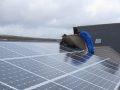
Some of the country’s most sustainable colleges will be discussing how they are integrating these projects into curriculum where students conduct campus greenhouse gas inventories, monitor classroom building energy use, and install rooftop solar panels. These living laboratory projects are preparing students for such careers as energy auditors, environmental engineers, HVAC technicians, and sustainability officers.
“As community colleges redesign and retrofit campuses in greener ways, we can use these projects as hands-on learning opportunities for our students,” said Walter G. Bumphus, AACC president and CEO. “Through the SEED Center, AACC is providing colleges with the models to build this experiential learning and make curricula relevant.”
Siemens has been a strong supporter of community colleges pursuing sustainability goals and is eager to work with institutions to develop living laboratories.
“Students who train in these living labs, solving real sustainability, energy and building system problems, no doubt have the hard and soft skills that are urgently needed in our industry. We are proud to partner with AACC’s SEED Center to provide a platform for colleges to share best practices so that these initiatives can be replicated across the country,” said Steve Hoiberg, Siemens’ global market manager for higher education.
Accompanying the event is the release of the report The Campus as a Living Laboratory: Using the Built Environment to Revitalize College Education. This free tool for colleges provides eight elements to building effective living laboratory environments.