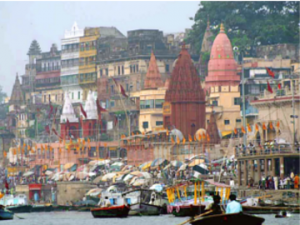
Earlier this year, Indian Prime Minister Narendra Modi outlined his ambitious plans to build 100 smart cities in the country, including one of the country’s holiest cities, Varanasi.
Part of the plans have included overseas endorsements of the programme, including a cultural partnership between the Japanese capital Tokyo and the US accepting a leading role in the development.
The programme is hoped to revolutionise city life and improve the quality of life for India’s urban population whilst introducing new technologies to modernise and innovate the cities.
Recently there has been mass migration to urbanised areas in India which have created a myriad of social problems including lack of water, insufficient public services and general overcrowding of major cities, experts have suggested that smart cities can help combat these problems and “avert a crisis”.
Writing in the Huffington Post, Alykhan Mohamed said of the smart cities iniative, “one of the biggest obstacles to housing is not the inability to design better, smaller, or more efficient buildings, but the political realities of land tenure and financing.
“That means smart cities may have the potential to create more efficient and adaptable ways to deliver services and manage cities, but unless they also address these underlying social and political problems, billions of dollars will be spent without addressing the fundamental problems that India’s cities face.”
Further, Mr Mohamed questioned whether technology is the ultimate solution. He cites the example of the operation in Mumbai where millions of lunchboxes are delivered daily by workers who are largely illiterate and operate using expert knowledge of the city, rather than any sophistication in terms of modern technology.
“If one of Mumbai’s most efficient and admired systems is a result of such low-tech ingenuity, we have to ask: will technology alone transform India’s cities into efficient, sustainable settlements?”
He stated, “successful solutions will marry technology with political savviness, a realistic assessment of citizens’ needs to solve the problems at hand”.
At the announcement of the smart city initiative, Secretary of India’s Urban Development ministry, Shankar Aggarwal stated that public consultation would form a key part of the decision process in creating smart cities.
“We have come up with a concept paper that is on our website. We have asked for suggestions from the people. After the suggestions are gathered, there will be work on citizens engagement, asking people their need and then will come up with a city development plan“.