Cristina Gamboa, chief executive officer of Colombia’s Green Building Council and chair of the WorldGBC’s Americas Network, said PPG is a welcome addition to each organization. “We are grateful for PPG’s support of our work, which promotes sustainability in the building environment,” she explained. “PPG has a long track record of commitment to fostering green building, and their best practices are an inspiration to the network of councils that partner with us under the World Green Building Council’s Americas Network.”
PPG manufactures collections of environmentally-advanced glasses, which includes SOLARBAN® solar control, low-emissivity (low-e) glasses; SUNGATE® passive, low-e glasses; STARPHIRE® ultra-clear glass; SOLARCOOL® and VISTACOOL® reflective and subtly-reflective glasses; and a full-range of performance tinted and clear glasses.
Deron Patterson, PPG international sales manager, flat glass, said PPG glass plays a vital role in reducing global carbon emissions, particularly through the Solarban line of low-e glasses, which help buildings cut energy use by reducing demand for air conditioning and artificial lighting.
“PPG’s membership in these influential organisations will expand our opportunities to participate in the global sustainable-building movement and to help architects maximize the performance benefits of PPG’s energy-efficient glass technologies,” he explained. “We are eager to become active in the important work of these councils and to enhance the implementation of green building practices throughout Latin America and around the world.”
PPG has been a member of the U.S. Green Building Council for 10 years and is now the first glass manufacturer to join the Green Building Council of Peru. In 2008, PPG became the first U.S. float glass manufacturer to have its products recognized by the CRADLE TO CRADLE CERTIFIED(CM) (C2C) Program, and today the company offers more C2C-certified architectural glasses than does any other float glass manufacturer.
]]>The three storey development at the Russell Group institution’s Heslington Campus, will include almost 4,000 sq m of office, laboratory and teaching space along with an auditorium housed in a distinctive oval rotunda. The space is divided between learning and research functions and office accommodation.
Aiming for a Building Research Establishment Environmental Assessment Methodology (BREEAM) rating of Excellent, the development comes complete with a raft of environmental measures including: the creation of a living green wall on the south elevation, solar photovoltaic panels installed on part of the building’s roof to help with power generation, a green roof and connection to the University’s existing district heating system.
Engineers are also investigating the possibility of using the nearby Scullions Lake to install a lake-source heat pump to further assist with heating the building.
Morgan Sindall area director, Kevin Donegan, said: “We are extremely proud to have the opportunity to play our part in the ongoing redevelopment of The University of York. It is a prestigious institution and we are very pleased to have been selected to deliver this important project for them.
“As with all our educational projects, we aim to create spaces which help people achieve their very best. This building will be one which will proudly boast its environmental credentials to all who will see and use it. It will become a key building in our higher education portfolio.”
Work on the development started in August 2014 and is expected be completed in the late summer of 2015.
]]>
The data reveals that a majority of Americans are generally favorable to smart homes, with 50 percent preferring do-it-yourself solutions, and nearly two-thirds (62 percent) find the smart home most beneficial for monitoring safety and security.
The Smart Home Survey, conducted online by Harris Poll on behalf of Lowe’s, polled more than 2,000 U.S. adults aged 18+ and finds that 52 percent of Americans feel that having a smart home is at least somewhat important to them. When it comes to purchasing consideration, more than half (56 percent) of Americans cite either cost or fees as the most important deciding factor (31 percent say monthly fee amount and 26 percent say the cost of equipment), followed by ease of use (13 percent) and security (11 percent).
“In general, Americans feel positively toward products that will make their homes safer, more energy efficient and easier to manage. It is added evidence that the smart home and Internet of Things are here to stay,” said Kevin Meagher, Lowe’s vice president and general manager, Smart Home. “People want DIY solutions that are simple and affordable, and that’s exactly what we provide with Iris. Lowe’s makes the home smarter by offering an easy, single user interface where consumers can control everything in and around their home with the brands they already know and trust.”
]]>“The Non-Domestic RHI is three years old this autumn and, as such, funds will be on the decline,” said Dick Stephens from Euroheat. “July’s tariff reduction is just the start of the slippery slope towards the end of the commercial version of the RHI and companies considering switching to biomass should make the move now while there’s still money in the pot.
“How quickly this will happen is anyone’s guess – we expected a reduction earlier on in the scheme and this never happened. The mild winter we’ve just had means tariff outputs have been abnormally low so it’s likely there’s more money to go around than might have been expected. Inflation’s also helped slow down the process with the 8.8 pence per kWh going down to just 8.4 – a negligible reduction, at the moment.
“There’s still money to be made in biomass and the businesses that have already seen the benefits of wood heating are reaping the financial rewards, while seeing a considerable reduction in fuel bills. Once the Non-Domestic RHI’s over this should not spell the end for biomass heating in the commercial sector – its’ long-term benefits far out way our reliance on fossil fuels which is undoubtedly bad for the environment, with fluctuating prices leaving businesses open to rising bills beyond their control.” Stephens concluded.
]]>
Toison d’Or was given an ‘Excellent rating’ for the building asset (Part 1 of the scheme) and an ‘Outstanding’ rating for building management (Part 2), achieving the highest ever score awarded under BREEAM In-Use Part 2.

Toison d’Or is one of many of Unibail’s shopping centres that are being assessed under BREEAM In-Use International as part of the company’s sustainability policy. This policy sets a target of obtaining BREEAM In-Use certification for at least 80% of the company’s managed retail portfolio by 2016.
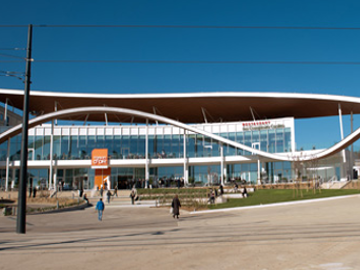
“BREEAM In-Use matches with the Group’s culture and management to improve the performance of our standings assets on a daily basis,” says Christophe Garot. “The BREEAM approach allows us to integrate and stimulate our tenants and maintenance suppliers to be sure that each technical device – for lighting, ventilation, heating and cooling etc – will be properly maintained and operated 365 days per year. Also, it helps us to demonstrate to investors that sustainability is embedded in the Group’s processes and in all business units.”
The BREEAM In-Use assessment at Toison d’Or was conducted by Bopro, a licensed assessor company based in Belgium. “During each BREEAM In-Use audit Unibail-Rodamco’s staff shows its enthusiasm to learn about sustainability and to improve their processes in order to have a better result after each audited asset,” said Bopro Director Stefaan Martel. “The track record of the certified assets is the best proof that this attitude pays off. Unibail-Rodamco sets an inspiring example in the commercial real estate sector and has a positive impact, not only on the awareness of its clients and suppliers, but also on the millions of shoppers who visit the shopping centres regularly.”
]]>Read on to find out more:
Carbon
Set targets to reduce carbon emissions and monitor performance and take account of carbon over the whole life of the project.
Have a plan for how you will save energy at every construction stage – from manufacturing to providing energy to the final product.
Figure out how users of the building will be able to save energy once they begin using it. You work doesn’t end once the project is complete and handed over.
Water
Like with carbon, set targets to keep water usage to a minimum. Use appliances that use less water and make use of technology that detects leaks.
Also think of options such as capturing rainwater and making use of that.
Equpment used during construction should be water efficient and employees should know that when a leak is found it should be reported and fixed asap.
Keel drains well maintained to prevent pollution.
Materials
Tell your suppliers that you want to be green and ask them for their advice as they will have more knowledge of the latest materials.
Make your project to “as compact, integrated and resource efficient as possible.”
Check that your materials “are certified to recognised responsible sourcing certification schemes where they exist.”
Waste
Minimise waste by avoiding late changes to designs and plans. Also “choose solutions that generate less waste and design assets that can be dismantled.”
Try your best to reuse and recycle as much of the waste as possible.
Biodiversity
Last but not least is biodiversity. Where are you planning to construct your project? Make sure it is not of ecological or agricultural value.
Also ensure there are no animals or plants in the area that may be effected by your constriction. Make sure you are not destroying their food sources and breeding sites.
You can also help animals and birds by building nest boxes and breeding sites in your design. Also think about green roofs and walls which can use native plants.
There are people who specialise in this sort of thing so don’t hesistate to ask them how “to develop long-term management plans that meet the needs of people and wildlife.”
]]>
On top of that, they must also meet requirements regarding place, health, equity, and beauty and should promote the use of renewable energy.
The projects are:
1. Zero Energy House in Auckland, New Zealand.
Energy efficiency was achieved through passive design and using energy-efficient lighting and appliances, among other measures.
2. The American Samoa Environmental Protection Agency office
This project includes a 56 kW photovoltaic system mounted on top of its roof and carport.
3. Center for Sustainable Landscapes at Phipps Conservancy & Botanical Gardens in Pittsburgh
4. The Zero Cottage in San Francisco
5. The Hood River Middle School Music and Science Building in Hood River, Oregon.
]]>
“ASHRAE’s participation is welcome news for the home building industry,” said NAHB Chairman Kevin Kelly, a home builder and developer in Wilmington, Del. “This cements the position of the National Green Building Standard as the preeminent green standard for residential construction.”
In 2007, NAHB and ICC convened a consensus committee of home builders, code officials, product manufacturers, building science and energy-efficiency specialists and governmental representatives to develop the standard. It was approved in 2009 by the American National Standards Institute (ANSI) as the first green standard for residential construction, development and remodeling. Since then, the National Green Building Standard has helped define and advance sustainable home building, remodeling and development – a sector expected to represent as much as a third of the market by 2016.
Now known as the ICC 700 National Green Building Standard (NGBS), it was updated in 2012 by a subsequent consensus committee and again approved by ANSI. NGBS has been used to certify more than 32,000 single- and multifamily homes and residential developments for reaching its established benchmarks for energy, water and resource efficiency, indoor environmental quality, home owner education and site development.
Applications to serve on the NGBS consensus development committee are open through April 6. That’s also the deadline to submit proposals to update or amend the new edition.
]]>The Mark Ginsberg Sustainability Fellowship honours Mark Ginsberg, whose support of the LEED green building rating system during his service at the Department of Energy’s Office of Energy Efficiency and Renewable Energy, in its earliest days, has been instrumental to the market transformation that has been the core mission of USGBC.
Trained in ecology and community development, Rosenberg brings a unique perspective to her work in the built environment. Her activity on policy at the city, state and national level, and on individual green building projects, has concentrated on community outreach and inclusion with specific contributions in the areas of urban agriculture, transportation services and affordable housing. With the USGBC, she was instrumental in the development of the impact categories and analytical weighting used in LEED v4, which launched in November 2013, bringing sharper focus on human health and social equity to the established environmental metrics.
“Heather’s work continues to bring to the fore crucial questions about how inclusion, community and human health are intertwined in the green building movement,” said Rick Fedrizzi, president, CEO and founding chair, USGBC.
As a fellow, Rosenberg will continue exploring best practices around issues of social equity by creating or improving tools, metrics and approaches that make equitable outcomes attainable for a variety of project types and stakeholder groups. She will also help disseminate this valuable information to members of the green building community, as she has in her most recent white paper, Social Equity in the Built Environment: an Initial Framework and Project Examples, co-authored with former LEED Steering Committee Chair Joel Ann Todd. The white paper examines the relative scarcity of green buildings that currently address social equity issues and can be accessed on the Green Building Information Gateway at Insight.gbig.org.
]]>“Wireless sensing and control technologies such as ZigBee, Z-Wave and EnOcean have been instrumental in making smart homes and buildings a reality,” said Mareca Hatler, ON World’s research director. “Today, these WSN technologies are being joined by Bluetooth and WiFi with large and dynamic developer communities and the outcome is exponential growth with new innovations especially for smart home devices and services.”
Annual shipments of WSN devices for smart homes and buildings will increase by more than 600% the next five years. The top three markets are the following:
Energy Management
Cloud services and Internet connected smart energy devices have given consumers as well as small and medium sized building managers unprecedented control over their energy consumption. Smart thermostats are one of the fastest growing smart energy markets, currently used by 15% of the broadband and smartphone/tablet users surveyed by ON World, up from 9% in 2010. Smart thermostats were also selected by these early technology adopters as the most likely to result in energy savings for their households.
By 2018, ZigBee and WiFi will make up two-thirds of the global WSN chipset shipments for home and building energy management.
Smart Lighting
Annual revenues for wireless smart lighting in residential and commercial buildings will reach $2 billion in 2017 up from under $300 million in 2012. Although revenues for commercial buildings will be the largest, residential smart lighting will be the fastest growing over this period.
Wireless light bulbs are the fastest growing smart lighting segment with retail sales increasing by over 250% over the past year. Lighting controls are especially popular for younger consumers. In a recent survey with 1,000+ U.S. consumers, 38% of the respondents aged 18-34 that are interested in home energy management indicated they would likely use lighting controls at home.
ZigBee will be the dominant wireless smart lighting technology over the next five years and make up over half of the WSN shipments for residential and commercial applications at this time.
Safety & Security
Respondents in ON World’s most recent survey with early technology adopters found that safety is the most valued home service they are interested in, followed by energy management and then security. Fifty-three percent (53%) of the respondents with a professional security monitoring service indicate they would pay $20 or more per month for a home control and automation service compared with 35% with a cable TV service. However, the Do-It-Yourself model is preferred and will be the fastest growing over the next five years.
Bluetooth Smart will be the fastest growing smart home WSN technology, increasing by an 85% compound annual growth rate between 2013 and 2018.
Based on surveys and phone interviews with nearly 1,600 individuals across the whole smart building value chain, ON World’s recently published, “Smart Building Set,” covers the global market for wireless sensor networking in smart homes and buildings. Five-year forecasts are included for equipment, services and chipsets with breakdowns by market segment, application, geography and technology. The technologies included are ZigBee, 802.15.4, WiFi, Bluetooth, Z-Wave, EnOcean and others.
]]>